
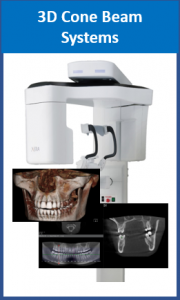
Many dental offices think a cone beam installation is similar to a panoramic installation. For installation technicians, the reality is quite different. The regulatory details, shielding expectations, and paperwork can be more involved with cone beam systems. For a dental service technician, understanding these differences obviously ensures smooth installations. However, even if you weren’t involved in the cone beam install, you may be able to add value by advising the office on how to stay compliant.
Shielding requirements can be a major difference between the two systems. A panoramic uses a narrow X ray beam, while a cone beam creates a much wider exposure field. Because of this, many states require a shielding evaluation from a certified medical physicist before the cone beam is installed. For a new installation, if the office has not begun this process, a technician can save them time by encouraging them to start early. For an existing cone beam, a technician may help the office avoid fines simply by asking if this step has been completed.
If the state requires a shielding evaluation, the physicist will typically need (among other information) scatter data from the manufacturer, and some type of drawing of the office. The physicist will prepare feedback on layout and shielding based on potential exposure concerns in the office. One of the primary items the physicist is looking for is employee exposure, as they are in the office everyday. For instance, if the front desk is right on the other side of the wall that the cone beam is attached to, the physicist may request alternative layouts, additional shielding, or both.
Documentation plays an important role in installation success. Every new X ray or cone beam installation requires an FDA 2579 form that certifies the device has been assembled according to manufacturer specifications. The installer must complete and distribute copies to the FDA, the state, the dentist, and their own records.
State registration rules may also differ between two dimensional systems and cone beam systems. Some states require separate registration for three dimensional equipment even if the dentist already uses panoramic or intraoral X rays. Keeping a reference sheet can help a technician give accurate guidance.
Once the cone beam is mounted, the physicist will often perform acceptance testing. This includes verification of geometric accuracy, exposure consistency, detector calibration, and reconstruction quality. Being prepared for these checks helps reduce the risk of inspection delays.
Network performance and computer capabilities also matter more for cone beam than for panoramic imaging. Cone beam scans create large files that require fast processing, sufficient RAM, and strong network speed. Confirming PC specifications before installation prevents performance complaints later.
When technicians take time to explain these details to dentists, it builds trust. Offices appreciate when you help them avoid delays and when you anticipate compliance needs instead of reacting to problems.
Ultimately, cone beam installation success comes down to preparation, communication, and a detailed understanding of compliance rules. However, even if the unit was installed some time ago, dentists will remember the technicians who offer consultative expertise to make sure not only the install, but also the lifetime operation smooth and stress free.
About ImageWorks
ImageWorks provides imaging systems that deliver excellent image quality, competitive pricing, and dependable performance without the headaches. We help dental professionals and technicians install and use imaging equipment with confidence and simplicity.