
Voxel size might sound like a small technical detail, but it plays a big role in how dentists interpret cone beam scans. As a technician, understanding what voxel size is, and how it affects image clarity and radiation dose, can help you explain system settings, troubleshoot quality issues, and guide dentists toward better diagnostic results.
What Is a Voxel?
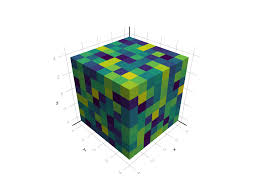
A voxel (short for volumetric pixel) is the 3D equivalent of a pixel on a flat image. In a CBCT scan, each voxel represents a tiny cube of data containing information about density. Smaller voxels mean finer detail, but it can also mean larger file sizes, longer scan times, and higher radiation exposure.
Why Voxel Size Matters
Voxel size determines how sharp the scan looks and how accurately anatomy can be measured. For implant planning or endodontics, high-resolution scans (around 0.1–0.15 mm) reveal fine details like canal morphology or thin cortical bone. For airway assessments or orthodontic planning, larger voxels (0.3–0.4 mm) are often sufficient and reduce dose.
How the Setting Affects Dose and Noise
Smaller voxels require more X-ray photons to maintain image quality, which increases patient dose. Conversely, larger voxels lower the dose but introduce more image noise. Helping dentists balance clarity with exposure is part of the technician’s advisory role.
Field of View Connection
Voxel size is tied to the field of view (FOV). When the FOV increases, the voxel size typically grows too. If a dentist wants both a large scan area and fine detail, it’s worth explaining the trade-offs: bigger scans mean more dose and longer reconstruction times.
Common Mistakes
Sometimes, dentists unknowingly use too small a voxel for routine cases, slowing workflow and filling hard drives with unnecessarily large files. Other times, they choose a large voxel and complain about blurry images. A quick technician-led review of presets can solve both issues.
System Capabilities
Not all CBCT units achieve the same voxel ranges. Some systems are optimized for small fields and fine detail, others for versatility and dose efficiency. Knowing the specific voxel settings of the system you support helps you make accurate recommendations.
Calibration and Software Impact
Even if voxel size is set correctly, calibration and reconstruction filters influence apparent sharpness. Flat-field calibration errors or outdated reconstruction algorithms can make a 0.125 mm scan look like a 0.3 mm scan. Periodic software updates maintain true resolution.
Communicating With Dentists
When a dentist says, “My scans don’t look as crisp as before,” you can ask: “What field of view are you using?” Educating them on this simple concept often solves misunderstandings without a service call.
Example Scenario
A practice scanning for endodontics at 0.4 mm voxels might miss a fine crack; switching to 0.125 mm reveals it clearly. On the other hand, using 0.125 mm for every patient may triple scan time and data storage. Context is key.
Conclusion
Voxel size sits at the crossroads of quality, dose, and efficiency. Helping dental teams understand its impact not only reduces complaints but also reinforces your credibility as the technical authority behind their imaging success.
About ImageWorks
At ImageWorks, we believe dentists deserve imaging technology that delivers exceptional image quality, great pricing, and dependable performance. Our panoramic, cone beam, and intraoral imaging systems are designed to provide crystal-clear diagnostics while keeping ownership simple and affordable.